Water heaters are one of the most important systems in your home, but they are easy to overlook until something goes wrong. Whether you are replacing an aging unit or choosing a system for a new home, it is worth taking the time to compare your options carefully.
Two of the most common choices are traditional tank water heaters and tankless water heaters. Each has its own advantages depending on your budget, household size, and how you use hot water on a daily basis.
This guide breaks down how each system works, along with the pros, cons, and key considerations to help you make an informed decision.
What Is a Traditional Tank Water Heater?
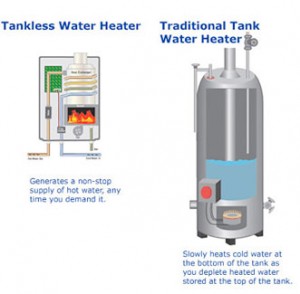
A traditional water heater stores and heats a set amount of water in a tank, typically ranging from 30 to 80 gallons. The system keeps this water heated at all times so it is ready when you need it.
How it works
Cold water enters the tank and is heated using either gas or electricity. The system maintains the water at a preset temperature, reheating it as needed throughout the day.
Advantages of tank water heaters
- Lower upfront cost compared to tankless systems
- Straightforward installation and replacement
- Reliable performance for homes with predictable hot water usage
- Widely available parts and service
Limitations to consider
- Limited supply of hot water. Once the tank is empty, you have to wait for it to refill and reheat
- Higher energy usage due to maintaining hot water even when not in use
- Larger physical footprint
- Typical lifespan of about 10 to 15 years
Modern high-efficiency models have improved performance, and many options now meet ENERGY STAR standards, but they still operate on the same basic principle of storing hot water.
What Is a Tankless Water Heater?
Tankless water heaters, also known as on-demand systems, heat water only when you need it. Instead of storing hot water, they rapidly heat water as it flows through the unit.
How it works
When you turn on a hot water tap, cold water passes through a heat exchanger inside the unit. The system heats the water instantly and delivers it directly to your fixtures.
Advantages of tankless water heaters
- Endless hot water supply under normal usage conditions
- Greater energy efficiency since water is only heated when needed
- Compact size that frees up space
- Longer lifespan, often 15 to 20 years or more
Limitations to consider
- Higher upfront cost for equipment and installation
- May require upgrades to gas lines or electrical systems
- Limited flow rate, which can be noticeable if multiple fixtures are used at once
- More complex installation compared to tank systems
Tank vs. Tankless: Key Differences at a Glance
Upfront cost
Tank systems are more affordable to install. Tankless systems require a larger initial investment, especially if modifications are needed.
Operating cost
Tankless systems are generally more energy-efficient, which can reduce monthly utility bills over time.
Hot water availability
Tank heaters provide a set amount of hot water. Tankless systems provide continuous hot water, but output depends on demand and system capacity.
Space requirements
Tank heaters take up more space. Tankless units are compact and can often be mounted on a wall.
Lifespan
Tankless systems typically last longer, sometimes nearly twice as long as traditional tanks.
Which Water Heater Is Right for You?
The right choice depends on how your household uses hot water and what you value most.
A traditional tank water heater may be a better fit if:
- You want a lower upfront cost
- Your home already has a compatible setup
- Your hot water usage is predictable and moderate
A tankless water heater may be a better fit if:
- You want improved energy efficiency
- You have a larger household with frequent hot water demand
- You want to save space or upgrade to a modern system
- You plan to stay in your home long enough to benefit from long-term savings
Should You Switch to Tankless?
Many homeowners consider switching to tankless when their current water heater fails. While the long-term energy savings and extended lifespan are appealing, the upfront investment can be a deciding factor.
It is also important to evaluate your home’s existing infrastructure. In some cases, installing a tankless system may require electrical upgrades, venting changes, or gas line modifications.
A professional assessment can help determine whether switching makes financial and practical sense for your home.
Rainaldi is Here to Help
Both tank and tankless water heaters have their place, and there is no one-size-fits-all answer. The best choice depends on your Orlando household’s needs, your budget, and your long-term plans for the home.
If you are unsure which system is right for you, Rainaldi can help you compare options, understand installation requirements, and choose a solution that delivers reliable hot water for years to come.